Claude Code vs OpenClaw: AI Coding Agent or Self-Hosted Assistant?
Claude Code vs OpenClaw, compared across coding workflow, automation, self-hosting, pricing, security, and who each tool fits best in 2026.


Claude Code vs OpenClaw looks like a simple head to head. It is not.
I reviewed the official docs, pricing pages, changelogs, GitHub releases, YouTube transcripts, tech news, and recent Reddit chatter for both tools on March 25, 2026.
Short answer. If your day lives inside a repo, terminal, IDE, tests, and pull requests, Claude Code is still the sharper tool. If you want a self hosted agent that can sit behind Telegram, WhatsApp, Discord, and a browser control panel, keep running while you are away, and route work across different models, OpenClaw is the more flexible system.
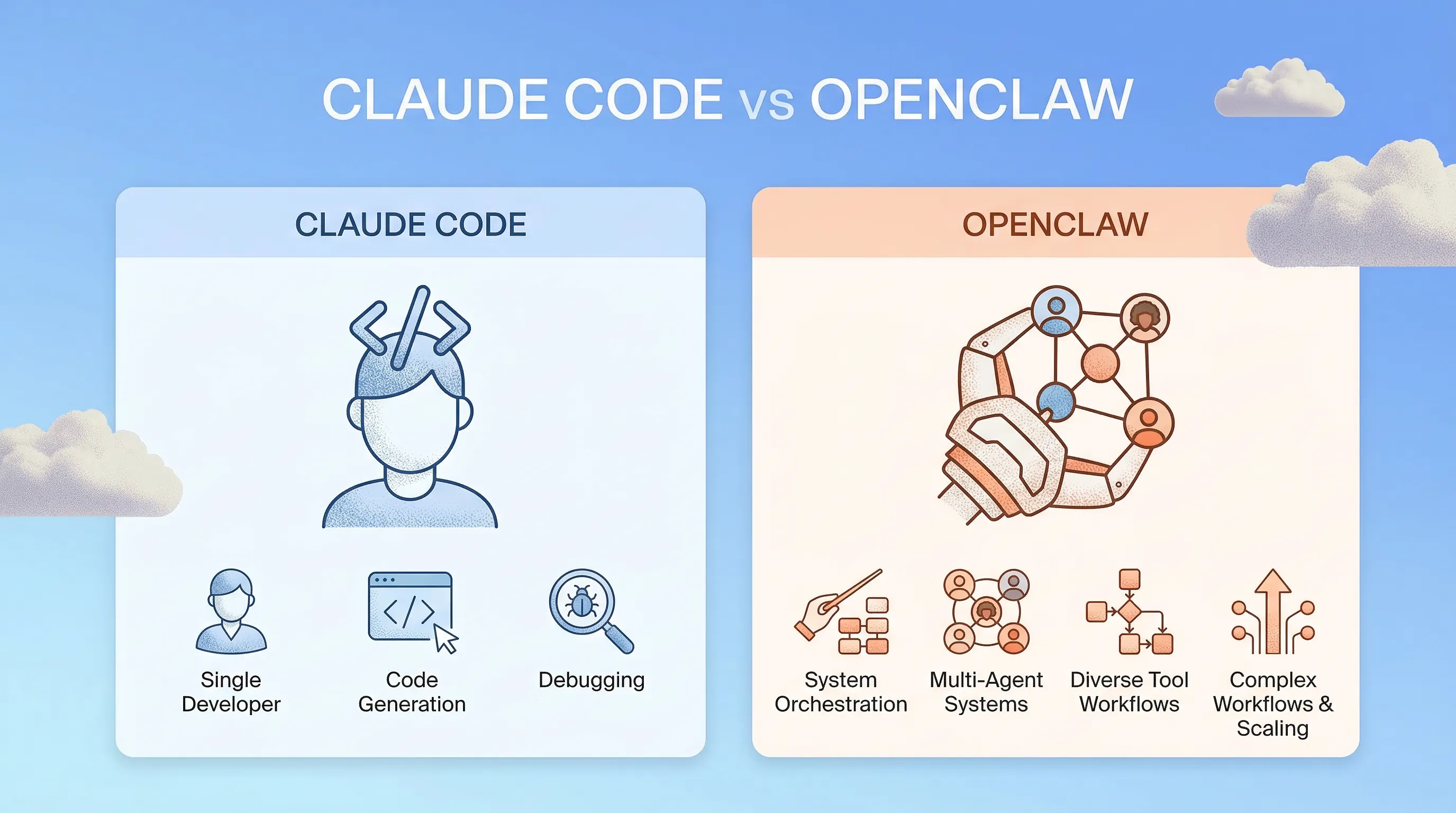
Claude Code vs OpenClaw at a glance
Claude Code is a coding product first.
OpenClaw is an orchestration product first.
Anthropic's own docs describe Claude Code as an agentic coding tool that can read code, edit files, run commands, and work across the terminal, IDE, desktop, browser, and Slack. OpenClaw's docs describe a Gateway that connects channels, sessions, agents, nodes, and providers. That wording matters. One product starts from "help me build software." The other starts from "help me run an assistant system."
That is why community discussion keeps splitting the two. Claude Code gets described as the better direct coding tool. OpenClaw gets described as the better background operator. One line kept showing up in the research: Claude Code is the worker, OpenClaw is the manager.
It also explains why these tools can overlap in one workflow without being true clones. OpenClaw's own Anthropic provider docs support Anthropic API keys and Claude setup tokens generated from Claude Code CLI.
Where Claude Code is clearly better
Claude Code feels more polished when the job is plain old software work.
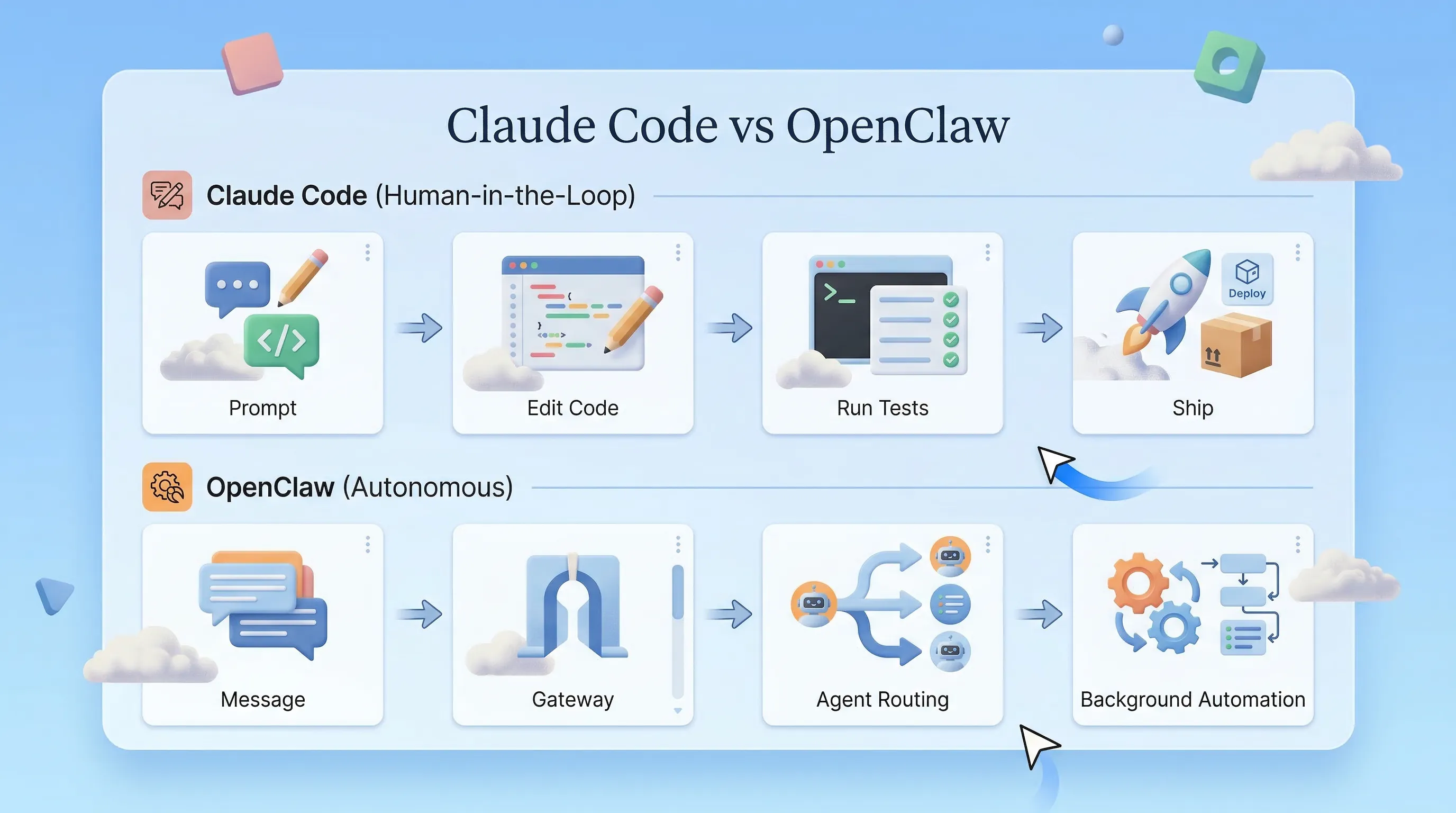
You point it at a codebase. It reads the repo. It edits files. It runs tests. It can work in VS Code and JetBrains, manage PR flows, resume sessions, use worktrees, and hand off to subagents. That core loop is where it feels strongest.
The guardrails are also better thought through out of the box. Claude Code defaults to read only behavior, then lets you open up more access with permission rules and modes. Anthropic has docs for allow, ask, and deny behavior, plus plan mode, don't ask mode, and more granular settings. If you work on a team, that matters. It means the tool is opinionated about risk before you even start.
Security is a real selling point here. Anthropic's October 20, 2025 sandboxing writeup says filesystem and network isolation cut internal permission prompts by 84%. It also shipped the web version of Claude Code. That was a big moment because it pushed Claude Code beyond a terminal only workflow without throwing away safety controls.
Claude Code has also widened a lot since mid 2025. The product page now lists desktop, web, IDE integrations, Slack, and newer docs add things like Remote Control, scheduled tasks, and code review preview.
But there are tradeoffs:
- The free Claude plan does not include Claude Code.
- Anthropic says average Claude Code spend can land around $100 to $200 per developer per month with Sonnet 4.6, though usage varies a lot.
- Heavy users still complain about caps and visibility. TechCrunch reported on July 28, 2025 that Anthropic introduced weekly limits after some subscribers ran Claude Code almost nonstop.
So the pitch is simple. Claude Code is better if you want the fastest path from prompt to tested code, with fewer moving parts.
Where OpenClaw pulls ahead
OpenClaw gets interesting the moment your problem is bigger than coding inside one terminal.
Its onboarding flow sets up a model provider, workspace, Gateway, optional channels, and an optional daemon. You are standing up a small agent system.
OpenClaw supports a broad provider list through official provider docs, including Anthropic, OpenAI, Google, Bedrock, Groq, Mistral, OpenRouter, Ollama, vLLM, xAI, DeepSeek, and more. It supports skills, plugins, and message based control across channels. If you want an assistant you can reach from your phone, a browser panel, or a chat app while it keeps running, OpenClaw was built for that shape from day one.
The community examples match the docs. In one recent YouTube video I watched, a user described running OpenClaw through Telegram against a dedicated Mac mini, then gradually giving it more services, memory, and autonomy. That is peak OpenClaw energy.
This flexibility is also why OpenClaw is messier.
The docs are very open about the risk. The skills documentation treats third party skills as untrusted code. That is the tradeoff. The more power you hand a self hosted agent, the more your security model starts to matter. TechRadar leaned into that on February 4, 2026 when it covered malicious OpenClaw skills and the wider attack surface around local execution.
There is also the maturity question. OpenClaw is shipping fast. Its GitHub releases show version 2026.3.23 on March 23, 2026, just two days before I wrote this article. Great for momentum. Less great if you want a quiet platform with slow changes.
So yes, OpenClaw wins when you want ownership, model freedom, channel support, and background automation. You just have to be honest about what comes with that: more setup, more maintenance, and more room for operator error.
Claude Code vs OpenClaw feature comparison
| Area | Claude Code | OpenClaw |
|---|---|---|
| Best fit | Focused coding in repos, IDEs, tests, reviews, and PRs | Self hosted agents, channels, automations, and long running orchestration |
| Setup | Faster out of the box, paid login required | Heavier setup, Gateway plus provider plus optional daemon and channels |
| Coding workflow | Better polish, stronger defaults, stronger repo and IDE flow | Can do coding, but that is not the whole product story |
| Automation | Improving fast with web, Remote Control, and scheduled tasks | Still broader for background jobs, channel routing, and always on use cases |
| Model choice | Mostly Anthropic shaped, with enterprise provider options | Much wider provider matrix and self hosted model options |
| Security posture | More mature guardrails and permissions by default | More flexible, but more exposed if you install risky skills or over grant access |
| Maintenance | Lower ongoing overhead | Higher ongoing overhead, especially if you self host heavily |
The table makes one thing obvious. If your main question is "which tool helps me code faster today," Claude Code wins. If your main question is "which tool can become my own agent platform," OpenClaw wins.
Which one should you choose
This is the part people usually overcomplicate.
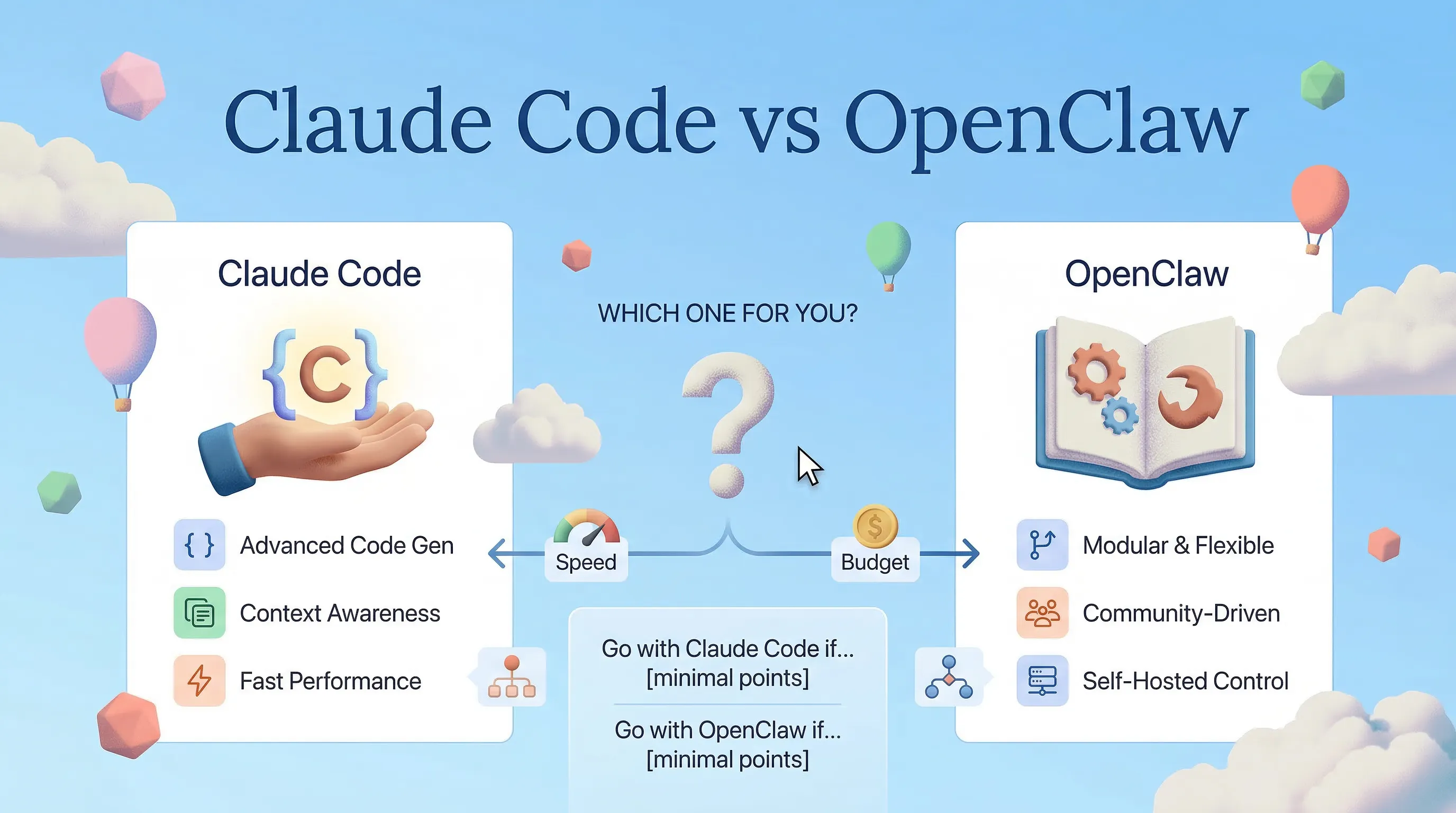
Choose Claude Code if:
- you want the best direct coding experience
- you work mostly in repos, terminals, and IDEs
- you want strong safety defaults without building your own stack
- you are fine paying for a polished product
Choose OpenClaw if:
- you want self hosting and wider model freedom
- you care about channels like Telegram, WhatsApp, Discord, or a browser control hub
- you want agents that keep running while you are away
- you do not mind owning the setup and security story
And if you are ambitious, use both.
That might be the real answer in 2026. Claude Code as the coding engine. OpenClaw as the orchestration shell around it.
So who wins the Claude Code vs OpenClaw debate?
For pure coding, Claude Code.
For agent orchestration and self hosted automation, OpenClaw.
For power users who want both speed and control, the smartest move may be to treat them like different layers of the same stack.